
Flying Dutchman
No bun, no lettuce, no sauce: two patties with two slices of cheese melted between them, and that is the whole order. It is the purest thing In-N-Out sells and a classic late-night choice. With nothing else in the way, the beef and the melt decide everything. My copycat takes it one step further and wraps the stack in thick onion slices instead of eating it bare.
The story
Two patties, two slices of melted cheese, no bun, no salad, nothing else — an order that turns a burger into cheese-welded beef. Like Animal Style it came from customers rather than head office, passed around by word of mouth for years before In-N-Out acknowledged it. The name has nothing to do with the recipe and no agreed origin, which is fitting for something the company never designed: it is a burger that exists because enough people asked for it the same way.
What’s inside
Make it at home
My copycat first, then everything I built on top of it.- My copycat
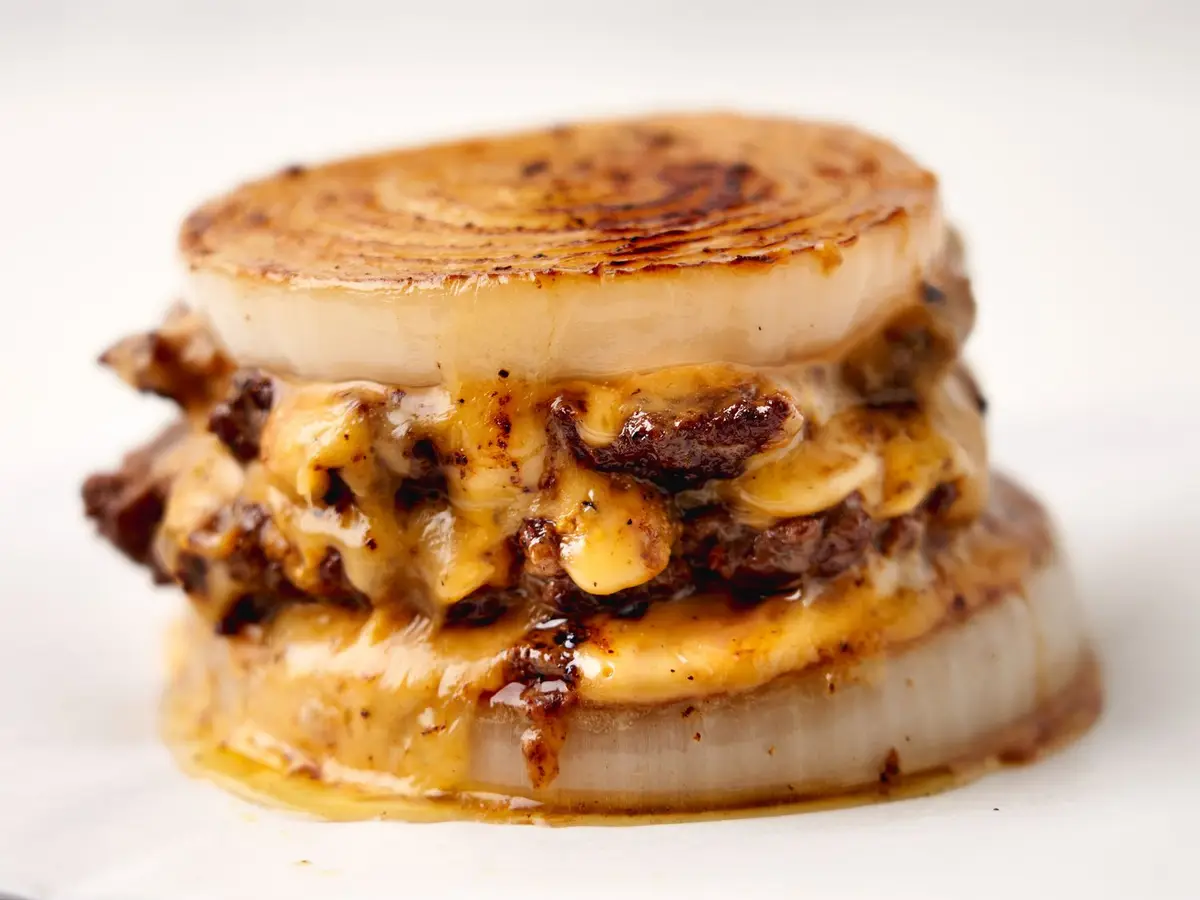 Copycat Onion Wrapped Flying Dutchman
The Flying Dutchman on YouTube
Everyone who has cooked, copied or taste-tested it on camera.

Similar burgers at other chains
Built around the same things as the Flying Dutchman.- Five Guys · beef, cheese and a double stack
 SignatureCheeseburger
- Steak 'n Shake · beef, cheese and a double stack
 SignatureOriginal Double ’n Cheese Steakburger
- Wayback Burgers · beef, cheese and a double stack
 SignatureCheeeesy
- Blake's Lotaburger · beef, cheese and a double stack
 SignatureLota Burger New Mexico Style
More from In-N-Out Burger
About In-N-Out Burger
In-N-Out has ignored almost every rule of fast food for more than seventy years. Harry and Esther Snyder opened a tiny drive-thru stand in Baldwin Park, California, in 1948, and the family still owns every location. No franchising, no freezers, no microwaves, and a menu that has barely grown: three burgers, fries, shakes and drinks.
Family-owned and never franchised. Spread across the western and southwestern US, slowly moving east.
Not affiliated with In-N-Out Burger. Trademarks belong to their owners.